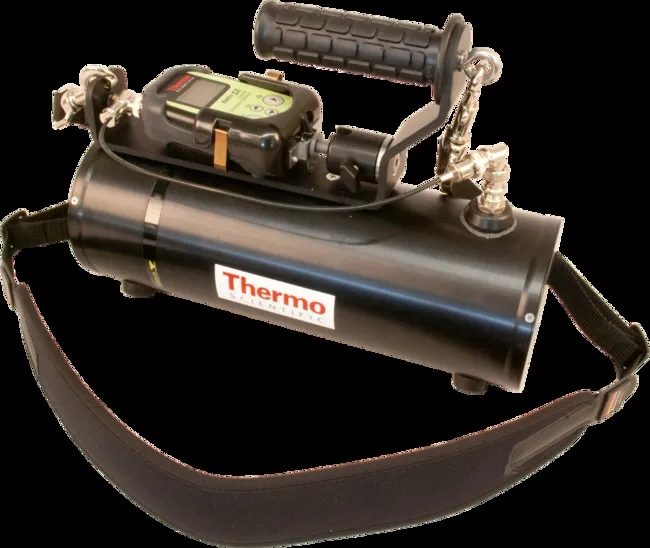
RadEye NBR High Sensitivity Gamma Radiation Monitor
Portable high-sensitivity gamma detection system with Natural Background Rejection (NBR), which distinguishes artificial from natural radiation when searching for shielded or remote sources.
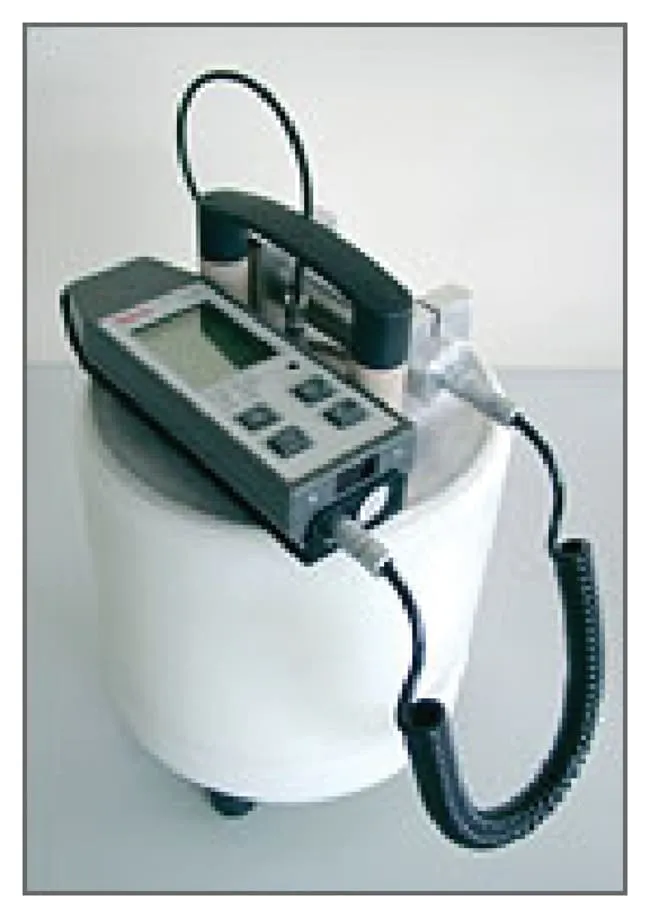
The system combines the compact RadEye SX meter with the FHZ 674 NBR detector. Even when the incremental dose rate is only in the order of 0.01 µSv/h, it gives unambiguous audible and visual alarm indication within seconds. The dose rate range is limited to 100 µSv/h; for higher dose rates an additional gamma survey meter such as the RadEye G-10 is recommended.
- Alarms on small traces of artificial gamma radiation, even with large variations in natural background
- Ideal for detection of shielded or remote sources
- 0 to 200 % bar graph shows the possible presence of artificial radiation during search (100 % = NBR alarm set point)
- Distinct audible indication for artificial radiation, separate from gross gamma alarms
- Weighs approx. 3 kg, one hand operation
No prices online – you will receive a quotation with price and delivery time. Need accessories? Mention them in your request.

Technical data
| System | RadEye SX, FHZ 674 NBR detector, detector cable and rugged carrying case |
|---|---|
| Measured quantities (with FHZ 674 NBR) | Count rate (cps, cpm), dose rate (Sv/h, rem/h), NBR |
| Detection sensitivity | Approx. 4000 cps per µSv/h at 662 keV |
| Energy sensitivity | Highly sensitive from 15 keV (front), respectively 30 keV (side) |
| Dose rate range (Cs-137) | 0.01 µSv/h to 100 µSv/h |
| Energy response (H*(10)) | Exceeds IEC 62533 requirements (±30 % for Am-241, Cs-137, Co-60) |
| Alarm threshold | Two alarm thresholds for count rate, dose and dose rate each, NBR; audible alarm 80 dB at a distance of 30 cm |
| Working temperature | −20 °C … +50 °C |
| Battery life time | Typically 150 h with FHZ 674 NBR |
| Detector dimensions | 308 × 230 × 110 mm |
| Weight | Detector 2800 g, RadEye SX 160 g, shoulder strap 200 g |
Source: Thermo Fisher Scientific, RadEye Selection Guide (2012). Full specifications are available in the documents.